
Kenya | Kakindu

from £10.50

Tasting Notes: berry, cola, stone fruit

This peaberry, top grade, fully washed lot is from Kakindu Estate in Kiambu, Kenya. Kakindu is a 76ha coffee farm first established by British colonists but is now one of 6 estates owned and operated by Sasini, a publicly listed company with a majority Kenyan ownership. Sasini’s estates have long placed an emphasis on equity and community. In the case of the estates’ workers this involves the provision of living quarters, early child education, union membership and guaranteed payment above minimum wage.

This specially selected lot has been chosen and roasted by CLO to celebrate roaster Tom’s wedding day. Having grown up in Kenya, the incredible coffee produced there is a favourite of his, and one he wants to share on their special day.

Grind:
Size:

FARM: Gakundu Farmers' Cooperative Society
REGION:
Embu, Central Highlands
PROCESSING: 
Washed
ALTITUDE: 
1600m - 1800m
VARIETALS:
Batian, Ruiru 11, SL28, SL34

The Region

The region of Embu is located in the South Eastern foothills of Mount Kenya, the highest mountain in the country and second highest in Africa after Kilimanjaro. The extinct volcano forms the backdrop for much of the surrounding country, as well as contributing to the soil fertility and cool air which allows Kenyan coffees to develop such excellence in the cup.

Bordering Kirinyaga county to the west, Embu is one of Kenya’s traditional coffee growing regions. Agriculture represents the largest sector of the local economy, with specialty coffee playing a significant role as a cash crop alongside tea and macadamia nuts.

The Process

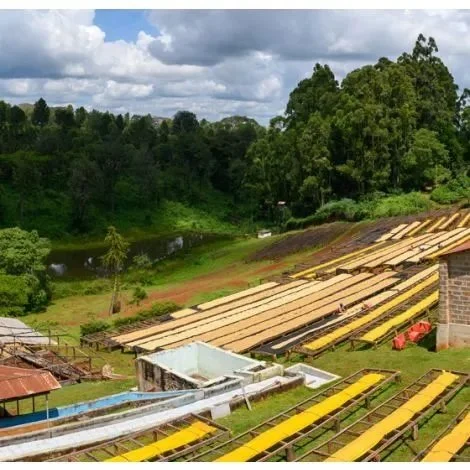
The coffee cherries are hand sorted for unripes and overripes by the farmers before they go into production. The pulp is removed and the coffee is fermented for 24-36 hour under close shade depending on climate temperatures. After fermentation the coffees are washed and again graded by density in washing channels. They are then taken to the drying tables where they will be sun dried on African drying beds for 12 to 20 days (this time depends on weather conditions). Coffees are covered in plastic during midday and at night to protect the beans from night moisture and rains.